If you’ve ever stood in a garden the size of a parking space and wondered what you’re even meant to do with it, you’re not alone.
Most UK gardens, especially in cities, aren’t the sprawling lawns you see in American house tours. They’re narrow strips, awkward L-shapes, or a patch of concrete behind a terraced house.
And yet a small garden can still hold a lot: a reading corner, a few pots of herbs, somewhere to sit with tea in the morning before the day gets loud. The trick is not to fight the size but to plan optimally to get the most out of it.
Zone It Like a Tiny Flat
Ever lived in a shoebox flat (and in London, who hasn’t)? Yes? You already know how to make a small space do more than one job. Gardens work the same way. Instead of treating the whole thing as one undefined patch of green, split it mentally into zones: a seating spot, a growing spot, and a spot that’s permitted to remain empty.
That last one matters more, actually. A garden that’s packed edge to edge with furniture and planters feels like storage. Leaving even a small patch open gives your eye somewhere to rest, and gives you room to actually move around in it.
Go Vertical
Once the floor space is spoken for, the walls and fences are still empty. Vertical growing is the single best trick for a small UK garden: wall-mounted planters, a simple trellis for climbers, hanging baskets that don’t eat into your seating zone at all.
Climbing plants like sweet peas or clematis work well against a south or west-facing fence in most of the UK. Herbs like mint and thyme are happy in wall pockets and mean you’re a few steps from something you can actually cook with.
Adding these doesn’t require a big budget. A few brackets and some secondhand pots will get you most of the way there.
Let the Lawn Take Care of Itself
Here’s the part nobody tells you about small lawns: they’re often the most neglected patch in the whole garden, not because people don’t care, but because mowing a strip of grass the size of a rug feels disproportionate to the effort.
You drag the mower out, extend the cord, do five minutes of work, and put it all away again. Most people just… stop bothering.
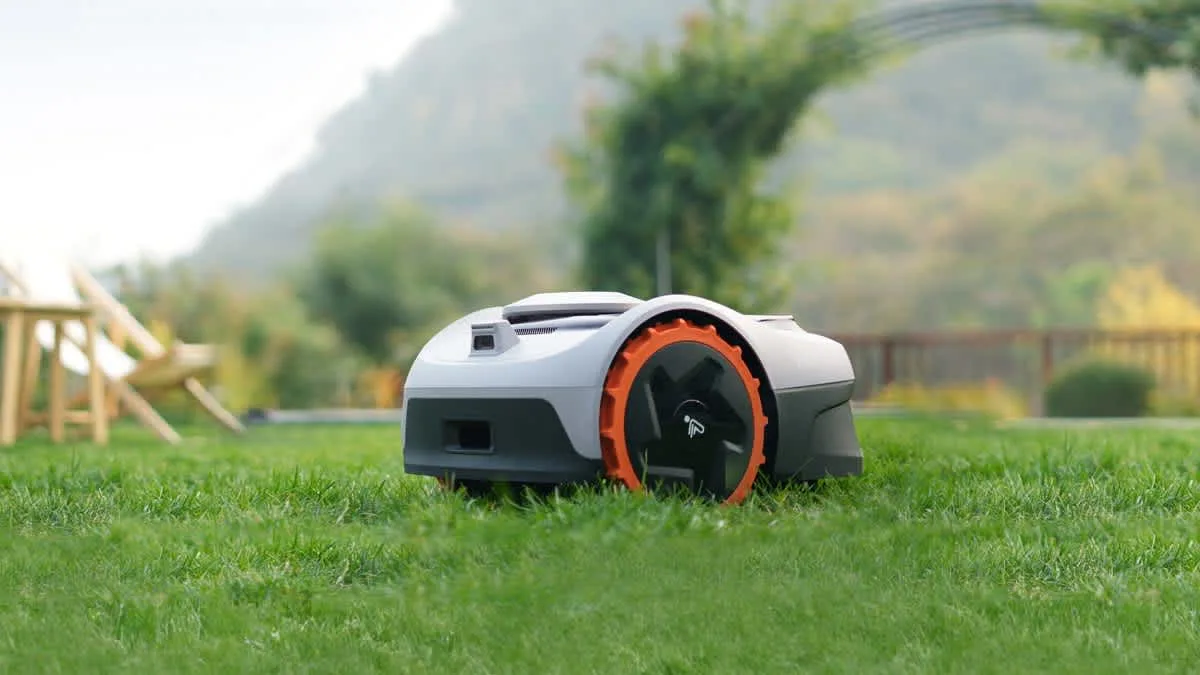
A robotic lawn mower solves this by removing the “is it worth it” question entirely. It runs on its own schedule, keeps the grass at a manageable height in the background, and means the lawn stays usable without ever becoming a weekend chore.
For small or oddly shaped UK gardens specifically, it actually performs more than it sounds: a lot of robotic mowers rely on boundary wires, which are a hassle to install around tight corners, raised beds, or shared fence lines.
This is a mower like Segway Navimow is worth a look. It uses wire-free mapping instead of buried boundary cables, which suits smaller, irregular plots far better than the setups made for half-acre lawns. You’re not out there untangling wire around your herb wall. You just let it get on with it.
Make It a Reading or Journalling Nook
Once the maintenance side is handled, the next question is what you actually want the space for. For a lot of people, that’s somewhere quiet enough to think.
A small bistro chair and a side table can turn this paved corner into a place you’d genuinely choose to sit with a book or a journal, rather than just walking past on your way to the bins.
If you keep a gratitude practice or journal regularly, a garden nook is a nice change of scenery from doing it at a desk. Pulling out a notebook and working through a few gratitude journal prompts outside, with actual weather and actual birdsong, hits differently than doing it indoors under a lamp.
Lighting for Evenings
British summer evenings are short, but they’re worth stretching out. Solar fairy lights along a fence, a couple of lanterns on the seating area, even a single string of warm white bulbs, and suddenly a garden that shuts down at dusk becomes usable until properly dark.
Solar options mean no cables to run, which matters even more in a small space where every wire is something to trip over or work around. It’s a small investment for a lot of extra usable hours across spring and summer.
Container Gardening for Renters
If you’re renting, which a large number of small-garden owners are, permanent planting isn’t a recommended option. Container gardening solves this without needing anyone’s permission. Pots, grow bags, and raised beds you can take with you all let you grow properly without touching the actual ground.
It’s also a genuinely low-cost creative outlet, up there with the kind of hands-on hobbies that make a flat or a garden feel like yours.
If you’ve been looking for something to add to your list of creative hobbies to try, a couple of pots on a windowsill or patio is about as low-stakes as it gets.
The Bigger Picture
Attempting such changes doesn’t require you to have some big garden or a big budget. All it needs is small decisions for your space.
Deciding what the space is actually for, and quietly removing the friction that stops you from using it. Automate the boring bits, like a small lawn that eats up more guilt than time. Spend the effort you save on the parts that actually make the space feel like yours: a chair you like, a pot of mint you can smell from the back door, somewhere to sit with a notebook when the weather allows it.
A small garden was never really the problem. An unused one is.