The first thing you notice isn’t the heat. It’s the noise. Real noise. Hammer on anvil, the hiss of hot metal hitting a slack tub of water, the low roar of the gas forge running in the background. Then the heat hits you, and then the smell. By the time your brain catches up, you’ve forgotten whatever you’d been turning over on the drive in. Which, as it turns out, is sort of the point.
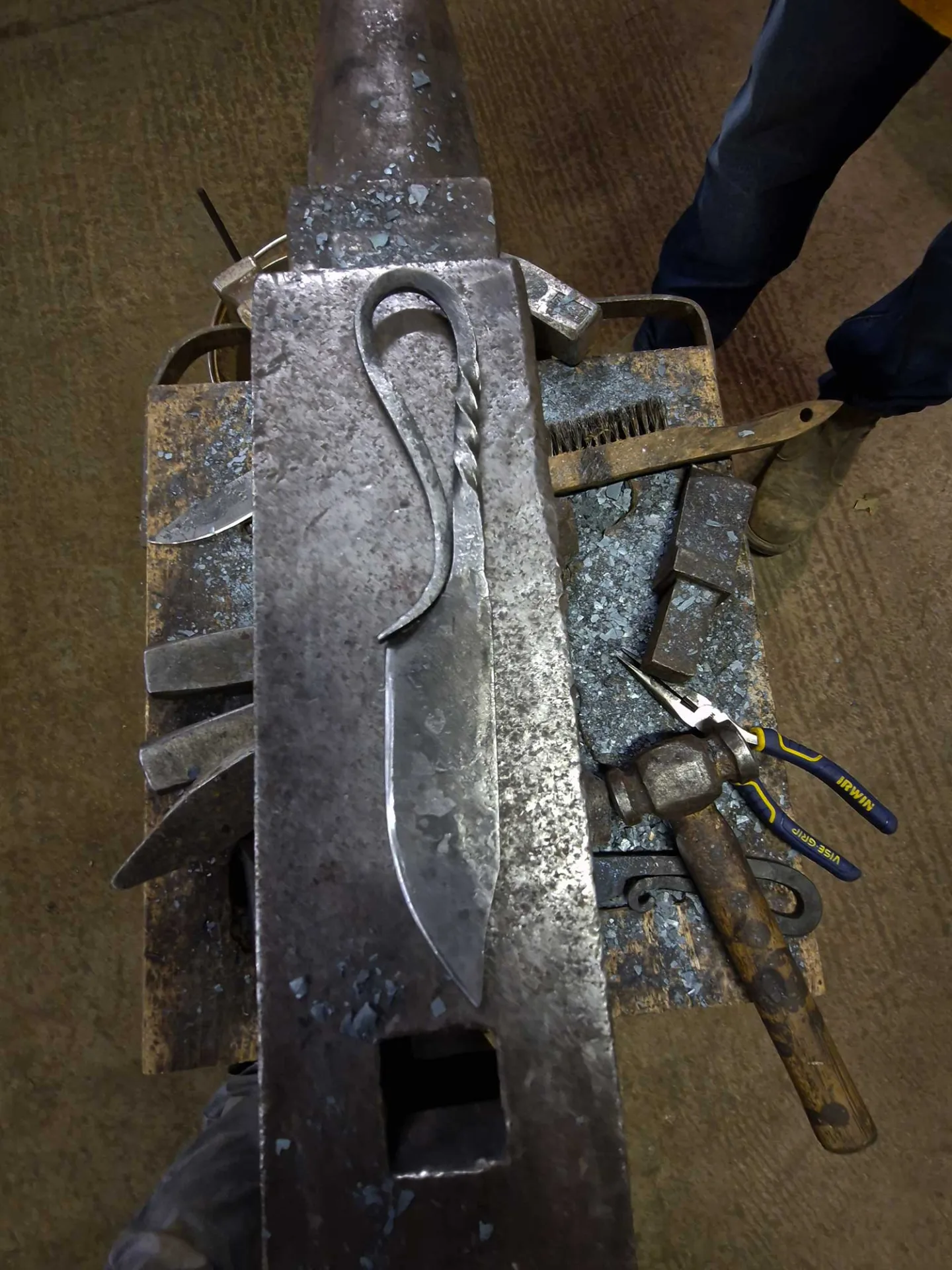
I run Soulful Iron, a working blacksmithing forge in Stroud, on the edge of the Cotswolds. I spend my days teaching people who have never picked up a hammer how to shape hot steel into something useful. Most of them arrive carrying a laptop in the car (figuratively or literally), and most of them leave with an object that wouldn’t have existed if they hadn’t shown up. A leaf. A hook. A small knife. A bottle opener with a slightly wonky twist in the handle that they’re already convinced is the best one they’ve ever owned.
What follows isn’t a sales pitch. It’s a description of what tends to happen when a creative brain that lives mostly on screens spends a day doing something its body remembers better than it does.
What you trade in for a hammer
If you do any kind of creative work for a living, you’ll know the particular feeling of being slightly stuck. You’ve been writing or drawing or editing or designing for so long that the work has gone flat. You can keep going, but everything you produce is just a slightly worse version of what you made last week. The trouble is, the cure isn’t usually more thinking. Thinking is what got you here.
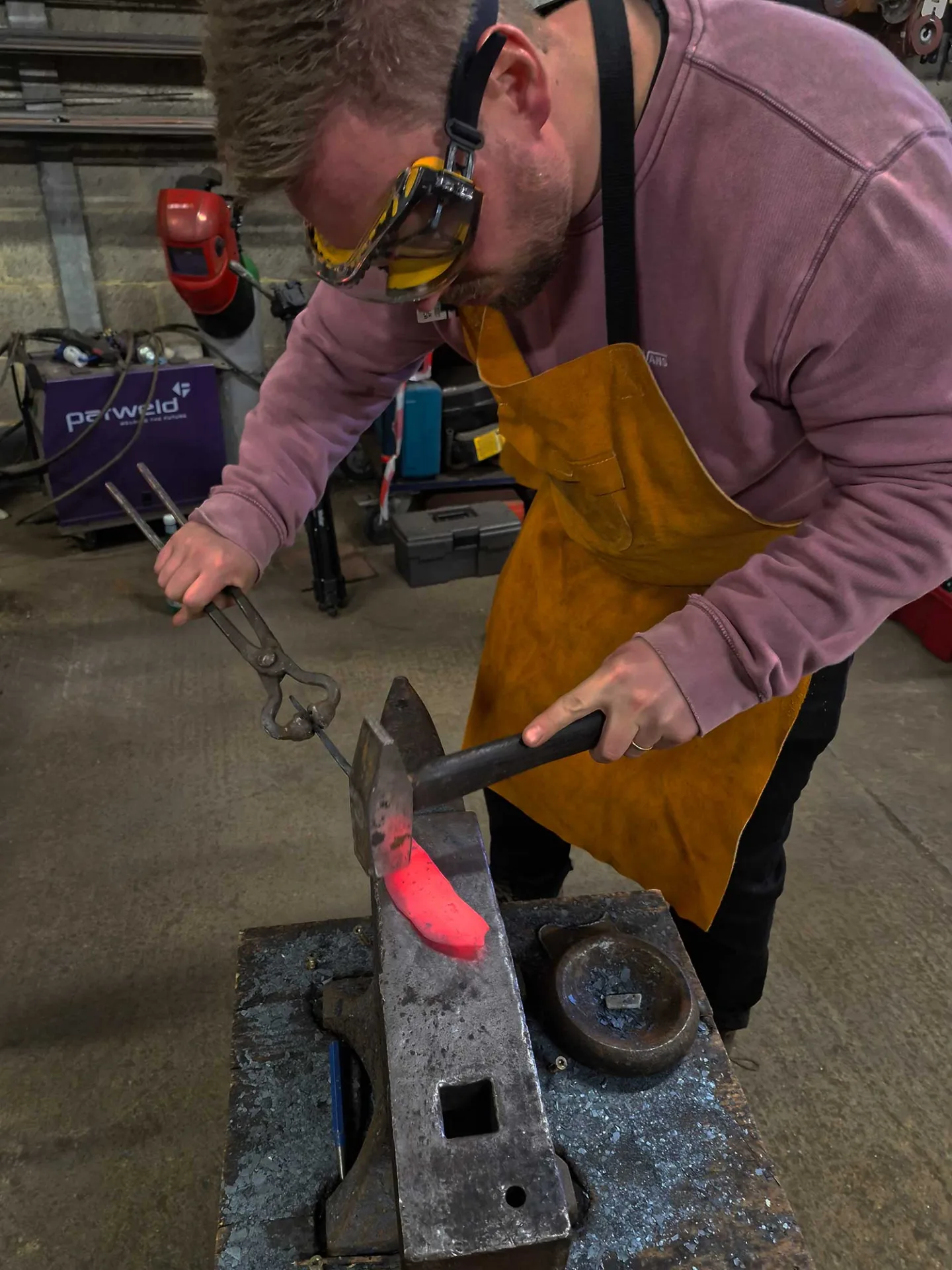
That’s where a forge becomes useful in a way that’s almost embarrassingly direct. You can’t be slightly stuck at an anvil. The steel is glowing orange, you’ve got maybe ninety seconds before it cools down past working temperature, and the hammer in your hand is heavy enough that you have to commit to every swing. There’s no half-doing it. There’s no checking your phone. The material moves when you hit it correctly and refuses to move when you don’t, and the feedback loop is so fast that your hands learn it before your brain has fully caught up.
People come out of their first heat looking faintly stunned. Then they go back for the second one.
Sensory overload, then quiet
The first hour is mostly your senses trying to keep up. You’re not used to gauging temperature by colour, or listening to the sound your hammer makes for clues about whether you’re hitting cleanly. You’re not used to the small, alert tension that comes from being aware of every hot thing in a six-foot radius. It’s a lot.
By the second hour, something settles. Your hands have picked up the basics. You stop flinching when the steel sparks. You start noticing the subtle things: how a piece behaves slightly differently if you’ve heated it through properly, how a single misaligned hammer blow leaves a mark that takes three more to fix. The work becomes interesting in a way that’s separate from “am I good at this.” You stop measuring yourself. You just do the next thing.
This is, more or less, what people describe when they talk about flow. The difference is that at a forge you don’t have to chase it. The conditions of the work force it on you whether you wanted it or not.
Why it feels meditative even though it’s loud
People sometimes describe their day at the forge as meditative, then catch themselves because the word doesn’t seem to fit. Meditation, in popular shorthand, is supposed to be quiet. A forge is not quiet. Hammers ring. Metal clangs. Something is always either heating up or cooling down with a hiss.
But the noise is the kind that fills the space and pushes other thinking out. It’s not the kind that competes with you. You can’t hear your phone over it, and even if you could, you wouldn’t reach for it because your hands are full. The brain, given a single big thing to attend to, often does what it does in a long shower or a long walk. It quietens down. The good ideas, the ones that wouldn’t come at a desk, start drifting up on their own.
It’s not unusual for someone to mention afterwards that an idea they’d been chasing for weeks suddenly came to them mid-hammer. Or that they hadn’t thought about work emails for six straight hours and felt like they’d been on holiday. I’m not trying to engineer any of this; it’s just what properly absorbing physical work tends to do to a creative brain that’s been over-using one set of muscles.
The bit that surprises people most
The thing nobody mentions in the booking enquiry, but everyone mentions on the way out, is how physical it is. Not painful, not exhausting in a bad way, but properly physical. By the end of the day there’s a faint hum in your shoulders. You can feel that you’ve used your body for something. For people whose week is mostly sitting still and squinting at pixels, that on its own is a small revelation.
There’s also the small ego-bruise of being a beginner at something for the first time in a while. Most of us, once we’re a few years into a career, spend our working hours doing things we’re already quite good at. Standing at an anvil for the first time is humbling in a useful way. You’re allowed to be bad at this. Nobody minds. By the end of the day you’re a bit less bad, and that small arc, beginner to slightly less of a beginner in a single afternoon, is genuinely good for the brain.
What you actually take home
The functional thing you take home is the object. Something you made. Most people are surprised by how attached they feel to it almost immediately, which I think is because it carries every minute of the day you put into it. The less functional thing, and probably the more important one, is the small recalibration that’s happened to your attention. For a few days afterwards (sometimes longer) you’ll notice you can settle into work in a way you’d half forgotten was possible. Whether that lasts depends on you, but the door has been opened.
If any of that sounds like the sort of creative reset you’ve been quietly looking for, our beginner blacksmithing experience days and knife-making days are open to anyone with two hands and a willingness to be slightly out of their depth for a morning. No prior experience needed. The hammer takes care of the rest.
About the author: Mike runs Soulful Iron, a working blacksmithing and knife-making forge in Stroud, Gloucestershire. soulfuliron.co.uk