(AD – I was gifted a duvet by Simba for this blog post).
January is when many people try to reset their routines. We promise ourselves earlier nights, fewer screens, and healthier habits. But when it comes to sleep hygiene, food is often forgotten.
When we think about poor sleep, we usually blame stress or too much screen time. Both play a role. But what you eat, and when you eat it, can also affect how easily you fall asleep and how well you stay asleep.
Lisa Arthis from the Sleep Charity shares her advice on how diet links to sleep, and what small changes could help you rest better as you head into the new year.
Why food matters for sleep
Your body needs the right nutrients to make the hormones that control your sleep cycle. Melatonin helps your body know when it is time to sleep. Serotonin helps you feel calm. Both are influenced by the food you eat.
Low levels of key nutrients such as magnesium, vitamin B6, and tryptophan can make it harder to sleep. Some foods can also disrupt blood sugar levels, which may wake you during the night.
Eating too much too late can also be a problem. Instead of winding down, your body focuses on digestion. That can make it harder to fall asleep or lead to broken sleep.
What to eat for better sleep
Certain foods give your body what it needs to support sleep. These can help you feel more relaxed in the evening and sleep more deeply.
Arthis says:
“You don’t have to give up some of your favourite foods, snacks or treats to get better sleep, but you do need to be mindful of when to eat them, especially if you want to increase your chances of feeling well rested in the morning.”
Foods that may support sleep include:
1. Oats
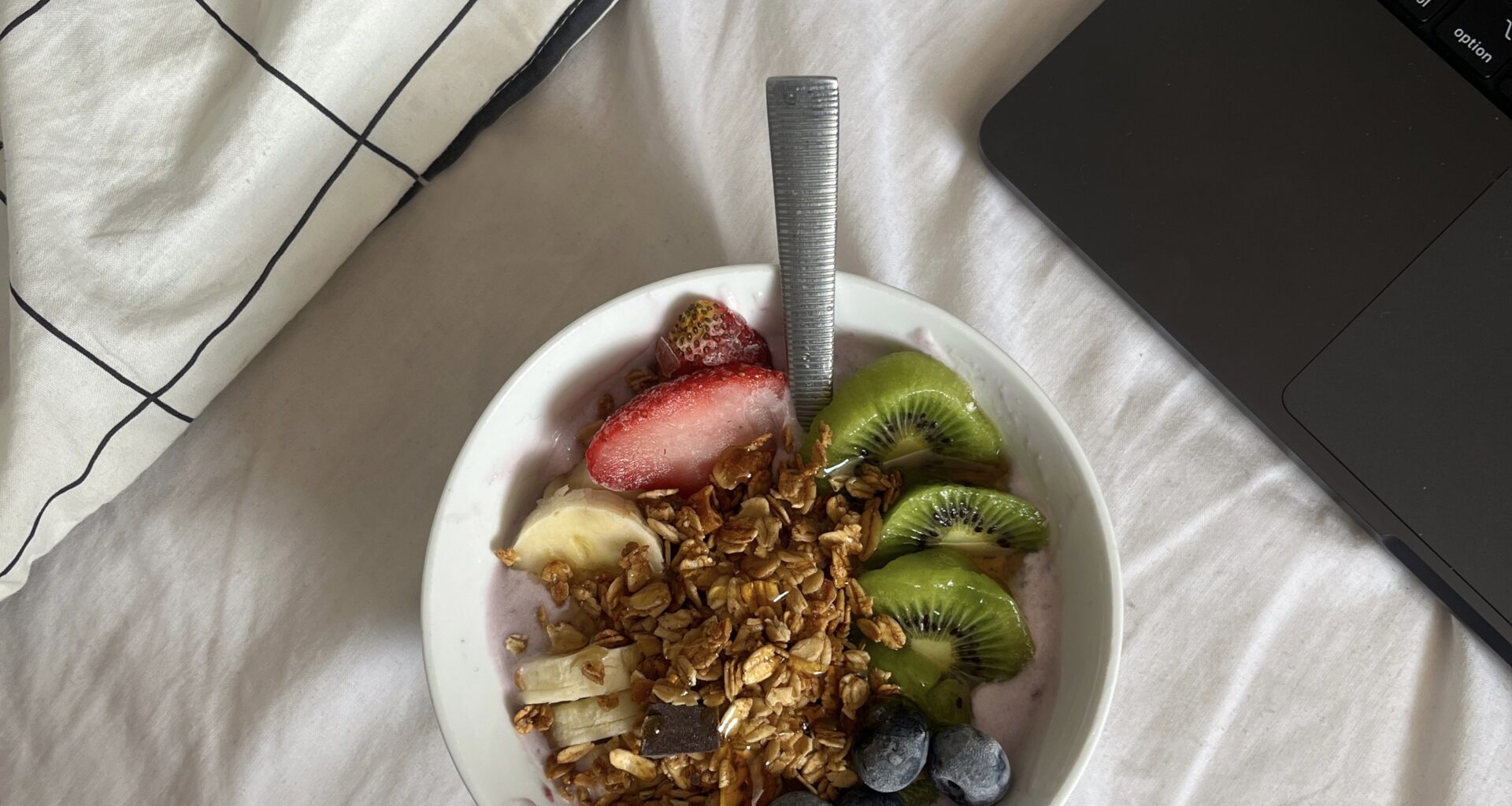
Oats are a natural source of melatonin and slow-digesting carbohydrates. This helps your body settle into sleep mode. A warm bowl of oats in the evening, without added sugar, can be a calming option during winter months.
2. Bananas
Bananas contain magnesium and potassium, which help muscles relax and may reduce night cramps. They also provide vitamin B6, which helps the body convert tryptophan into serotonin.
3. Almonds
Almonds are rich in magnesium, which plays a role in deeper sleep. A small handful before bed may also help regulate blood sugar overnight, particularly if dinner is eaten earlier.
4. Kiwi
Kiwi contains antioxidants and serotonin. Studies suggest people who eat kiwi before bed may fall asleep faster and sleep longer. It is also relatively low in sugar.
5. Chamomile tea
While not technically food, chamomile is worth including. It has calming properties and may help you unwind before bed. Just avoid drinking too much late in the evening.
What to avoid late in the day
Some foods and drinks can interfere with sleep, especially when consumed in the evening. Arthis explains:
“Certain foods can tax the digestive system, leading to sleep disturbances. If your stomach often keeps you awake at night, limit eating the following foods or drinking too much water less than 3 hours before lights out.”
Try to reduce or avoid:
Caffeine
Caffeine blocks adenosine, the chemical that makes you feel sleepy. It can stay in your system for hours, sometimes up to eight. This includes coffee, some teas, energy drinks, fizzy drinks, and chocolate. If sleep is a struggle, stopping caffeine after lunch may help.
Spicy foods
Spicy meals can raise body temperature, which works against the natural cooling process needed for sleep. They can also trigger heartburn or indigestion, especially when eaten late.
Heavy meals
Large, rich meals late in the evening can leave your digestive system working overtime. Fatty or fried foods are particularly difficult to digest. Aim to eat dinner at least two to three hours before bed.
When you eat matters too
Sleep hygiene is about timing as well as food choice. Eating too close to bedtime can cause discomfort. Going to bed hungry can be just as disruptive.
Simple habits to aim for in the new year include:
- Keeping regular meal times
- Finishing dinner a few hours before bed
- Choosing a light snack if needed, such as a banana, a small bowl of oats, or a few almonds
Final thoughts
Getting better sleep does not always mean buying new bedding or changing your bedroom. Sometimes, it starts earlier in the day with small, consistent choices around food and timing. Sleep hygiene also includes the space you sleep in. Temperature, light, and how settled a room feels all matter. Even practical considerations, such as whether a bedroom comfortably accommodates a queen mattress, can influence airflow, movement, and how easy it is for the body to relax at night.
As a New Year’s resolution, improving sleep does not need to be dramatic. Adjusting what and when you eat is a sensible place to begin. It is not a quick fix, but it is a practical step towards more restful nights in 2026.
All the best,