Your living room walls do more than hold colour. They set the emotional temperature of the whole room, whether you’ve thought about it or not. Walk into two flats with identical furniture and identical paint, and the one with a bit of dimension on the walls will almost always feel warmer and more lived-in.
That’s part of why 2026 has seen such a clear move away from flat prints and neat gallery walls toward bigger, tactile, dimensional pieces. It’s not just an aesthetic trend, either. There’s genuine psychology behind why a textured surface changes how a room feels, even when you’re only looking at it and not touching it.
Why Textured Wall Art Actually Changes How a Room Feels
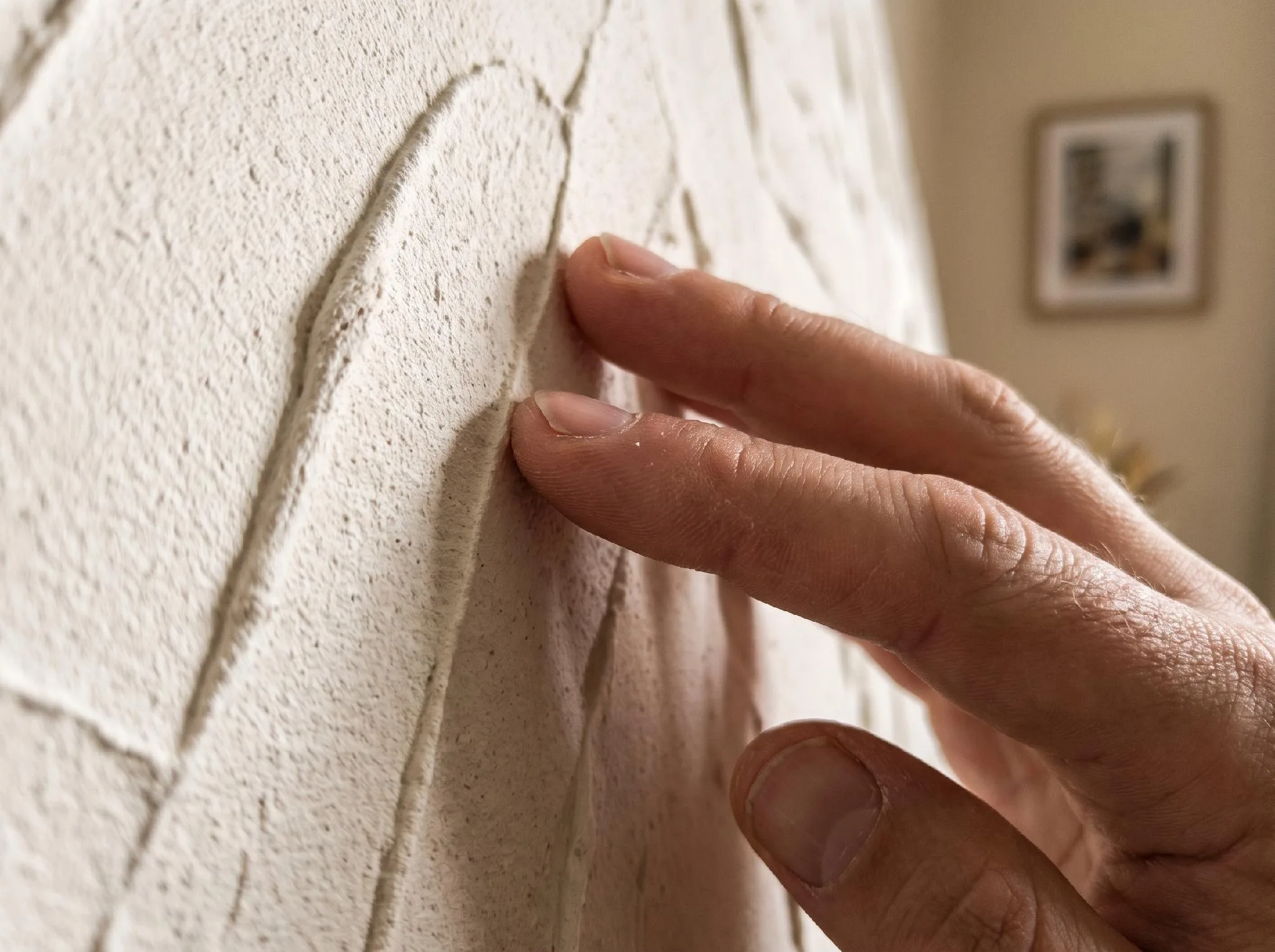
There’s a real scientific basis for this, and it comes down to something researchers call embodied cognition. The idea, in short, is that how we physically encounter surfaces is linked to how we think and feel about the space around us, even before we consciously register why. A peer-reviewed study published in the International Journal of Environmental Research and Public Health examined how wall texture affects perceived spaciousness and found that texture’s emotional and associational qualities become more pronounced as room size increases. In plain terms, a textured wall doesn’t just look different. It changes how big, how warm, and how personal a room feels.
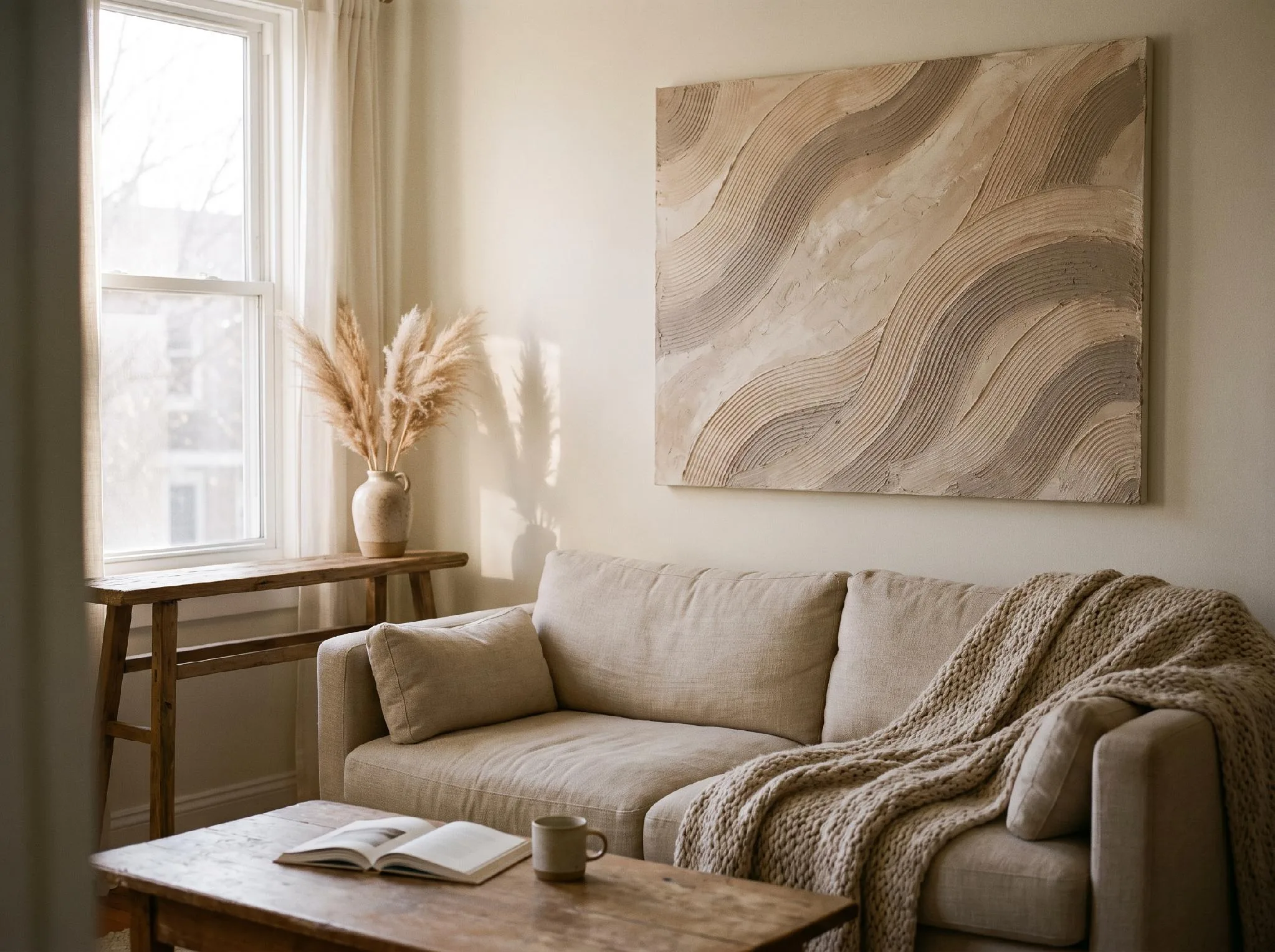
That’s the gap flat prints leave. A photo or a canvas print gives you colour and image, but it doesn’t give your eye anything to travel across, no shadow, no ridge, no shift in light as you move through the room. If you’re decorating a first flat and want it to stop feeling like a hotel room, using textured wall art in living rooms can make an outsized difference with very little extra effort. One statement piece with real dimension does more emotional work than three flat prints hung side by side, because your brain reads depth as presence rather than decoration.
Think about the difference between walking past a photograph and walking past a raised plaster relief. Even without touching it, your eye and your sense of scale respond to the shadow play and the surface variation. That’s embodied cognition doing its quiet work in the background, and it’s a big part of why a single oversized, textured piece can make a rented flat feel like somewhere you actually chose to live.
The 2026 Shift: Why Everyone’s Moving Beyond Flat Prints
The market data backs this up too. The global wall art market is now valued between $67 and $71 billion, and it’s projected to reach $145 billion by 2034, according to Fortune Business Insights data cited by Gelato’s 2026 wall art trends report. Personalised and original art is the fastest-growing segment within that, expanding at a 23 to 25% compound annual growth rate per Grand View Research.
That growth isn’t accidental. Rossetti Art’s 2026 canvas print and wall art statistics report found that personalised canvas prints appeal to over 58% of new homeowners buying wall art, a clear signal that people want pieces that feel chosen rather than mass-produced. There’s a sustainability angle too. Gelato’s research also found that 83% of consumers prefer brands with strong sustainability records, which feeds directly into demand for original, handcrafted textured pieces over factory-line flat prints.
Put those threads together and you get a fairly simple picture: shoppers are tired of walls that look like everyone else’s walls. Texture, because it’s harder to mass-produce and easier to make feel unique, is filling that gap.
Choosing the Right Texture and Palette for Your Space
Once you’re sold on texture, the next question is how much and where. A common mistake is trying to fill a wall the way you would with a gallery wall, lots of small pieces scattered around. With texture, restraint usually wins. One oversized, dimensional statement piece tends to read better than a cluster of smaller textured frames, partly because of that same spaciousness research: textures’ emotional impact gets stronger in larger rooms, so a bigger single piece lets that effect actually land.
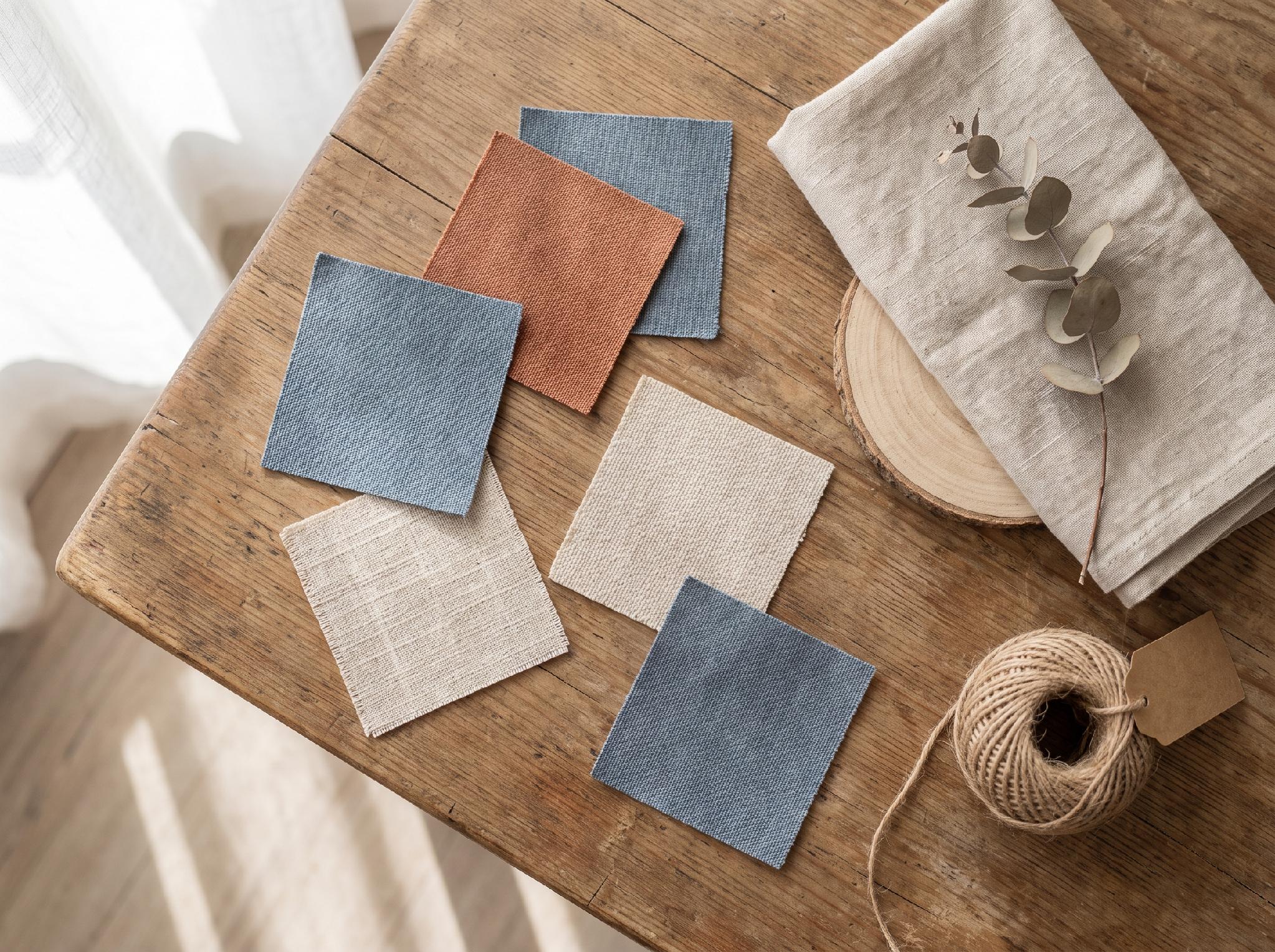
Palette matters just as much as scale. Muted blues, clay tones, and warm creams pair naturally with heavy texture because they let the shadow and relief do the visual work instead of competing with bold colour. Pair a textured piece with natural materials nearby, a wood side table, a linen throw, and the whole corner starts to feel considered rather than assembled. If you enjoy building out a wall with a mix of pieces rather than one big statement, our piece on creating a gallery wall that feels personal covers how to keep a multi-piece layout from looking cluttered.
Textured Wall Art for Small Spaces and Rented Flats
This is where a lot of trend pieces fall short, because most of them are written for people who own detached houses with blank walls to spare. If you’re renting, or you’re in a small first flat, the calculus is different. You can’t skim-coat a wall in Venetian plaster or install backlit panelling, and you probably shouldn’t be drilling more than a handful of holes anyway.
The good news is texture doesn’t require permanence. Lightweight 3D canvases and relief pieces hang the same way a flat print does, on a single hook or a strip of adhesive strips, but they deliver far more visual presence per square foot of wall. In a small room, one oversized textured piece almost always beats a scattered gallery wall, because it gives your eye one clear focal point instead of six competing ones. That matters more in compact spaces, where every extra frame edge adds visual noise. If you’ve been leaning toward bold pattern already, our guide on leaning into bold pattern and texture at home has some useful principles for small-space styling that translate well to texture too.
Living With Texture Day to Day
Lighting changes everything with textured pieces in a way it simply doesn’t with flat prints. Side lighting, from a lamp placed to one side rather than a ceiling light directly above, throws shadows across raised surfaces and makes the piece look different depending on time of day. It’s a small thing to plan for, but it’s worth positioning your reading lamp or a cheap clip light so it catches the piece at an angle rather than head-on.
Textured pieces also don’t need to be swapped out with the seasons the way smaller decor often does. A single statement piece can anchor a room year-round while you rotate cushions, throws, and smaller accents around it. If you like refreshing your space when the seasons change, our roundup of easy seasonal decor updates pairs well with a textured centrepiece, since you’re only changing the smaller layers rather than starting from scratch.
Making Your Walls Feel Like Home
Texture isn’t just something to chase because it’s trending in 2026. It’s backed by real research on how we perceive and emotionally respond to space, and it’s a genuinely practical fix for anyone trying to make a rented flat or a first place feel like it belongs to them rather than a landlord.
You don’t need to redo every wall to feel the difference. Start with one intentional piece in the spot you look at most, above the sofa, opposite the door, wherever your eye naturally lands, and let it do the work that a dozen small frames never quite manage.