My phone tells me my screen time is down this month, and I genuinely can’t tell if that’s progress or if I’ve just replaced doomscrolling with something else that still counts as “screen adjacent.” Either way, I’ve noticed a pattern lately among friends who are usually glued to their phones: they’re picking up hobbies that ask for almost nothing except a bit of attention. Journalling. Cross-stitch. And, somewhat unexpectedly, paint by numbers.
It sounds like a children’s activity, something you’d find in a Christmas stocking next to a colouring book. But treat it as an actual evening ritual, the way you’d treat journalling or a gratitude practice, and it starts to look like one of the most accessible forms of creative self-care around. No talent required, no blank page anxiety, just a canvas, some small pots of paint, and permission to slow down for an hour.
The Science Behind Why Painting Calms an Anxious Mind
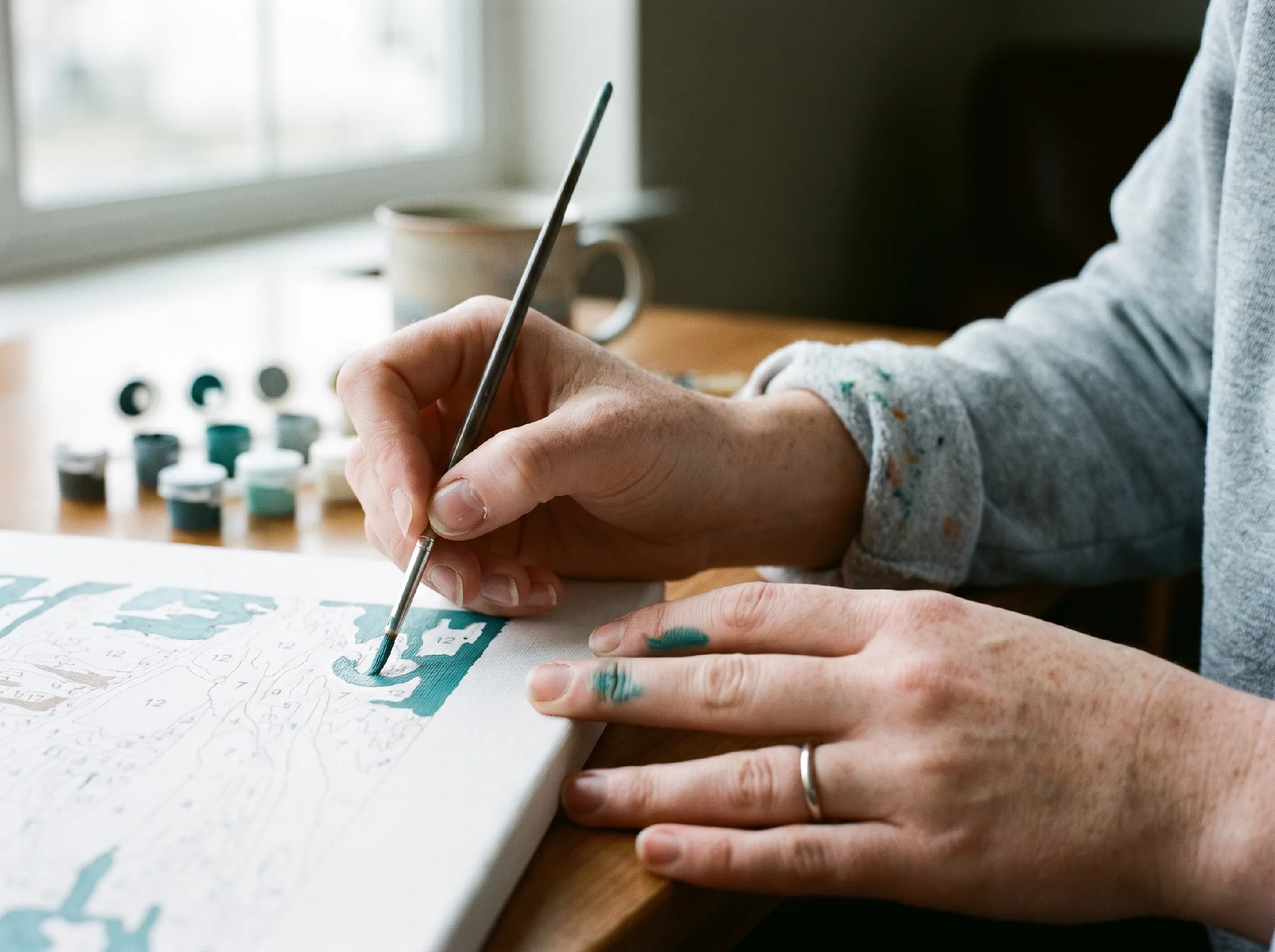
There’s a reason repetitive, low-stakes creative tasks feel so soothing. When you’re focused on filling in one small numbered section at a time, your brain settles into something close to a flow state: fully absorbed in a task that’s neither boring nor stressful. That balance matters. Too easy and your mind wanders back to your to-do list; too hard and you tense up. Painting by numbers sits in a sweet spot that keeps your hands busy and your thoughts quiet.
A 2016 study published in the journal Art Therapy found that 75% of participants had measurably lower cortisol levels after just 45 minutes of art-making, regardless of their skill level. That detail matters more than it might seem. You don’t need natural artistic talent to feel these effects, which is exactly why starting with a paint by the numbers kit works so well for beginners. The structure does the hard part for you; you just show up and colour inside the lines.
More recent research backs this up. A 2025 systematic review published in Psychiatria Danubina, analysing 14 randomised controlled trials, found that visual art therapy reduced anxiety in sessions as short as 15 minutes. You don’t need to carve out a whole weekend. A quiet evening and a partially finished canvas can genuinely shift how your nervous system feels by the time you go to bed.
What the Data Says About Creative Hobbies and Mental Health in 2025
It’s not just small clinical trials pointing this way. A UK survey from Jackson’s Art Blog, published in March 2025, found that 21% of artists say art helps them feel relaxed, 20% say it boosts their confidence and self-esteem, and 9% report it reduces symptoms of anxiety or depression. In the same survey, 20% of respondents named crafts as their main hobby and 15% chose art specifically, which tells you this isn’t a niche interest confined to people who already think of themselves as “creative types.”
A 2025 scoping review published on Taylor & Francis Online reached a similar conclusion: creative hobbies such as painting and writing reduce symptoms of stress, anxiety, and depression, and contribute to personal growth and social connection. That’s a fairly bold claim for something as unassuming as an evening spent filling in a numbered canvas, but the pattern keeps showing up across different studies and different populations.
This matters more given where things stand for younger adults specifically. Among UK adults aged 16 to 24, rates of common mental health conditions climbed from 17.5% in 2007 to 25.8% in 2023/24. Accessible, low-cost creative practices aren’t a luxury add-on to wellbeing routines anymore; they’re one of the few tools that don’t require a waiting list, a subscription, or a diagnosis to access.
Turning Paint by Numbers Into a Proper Self-Care Ritual
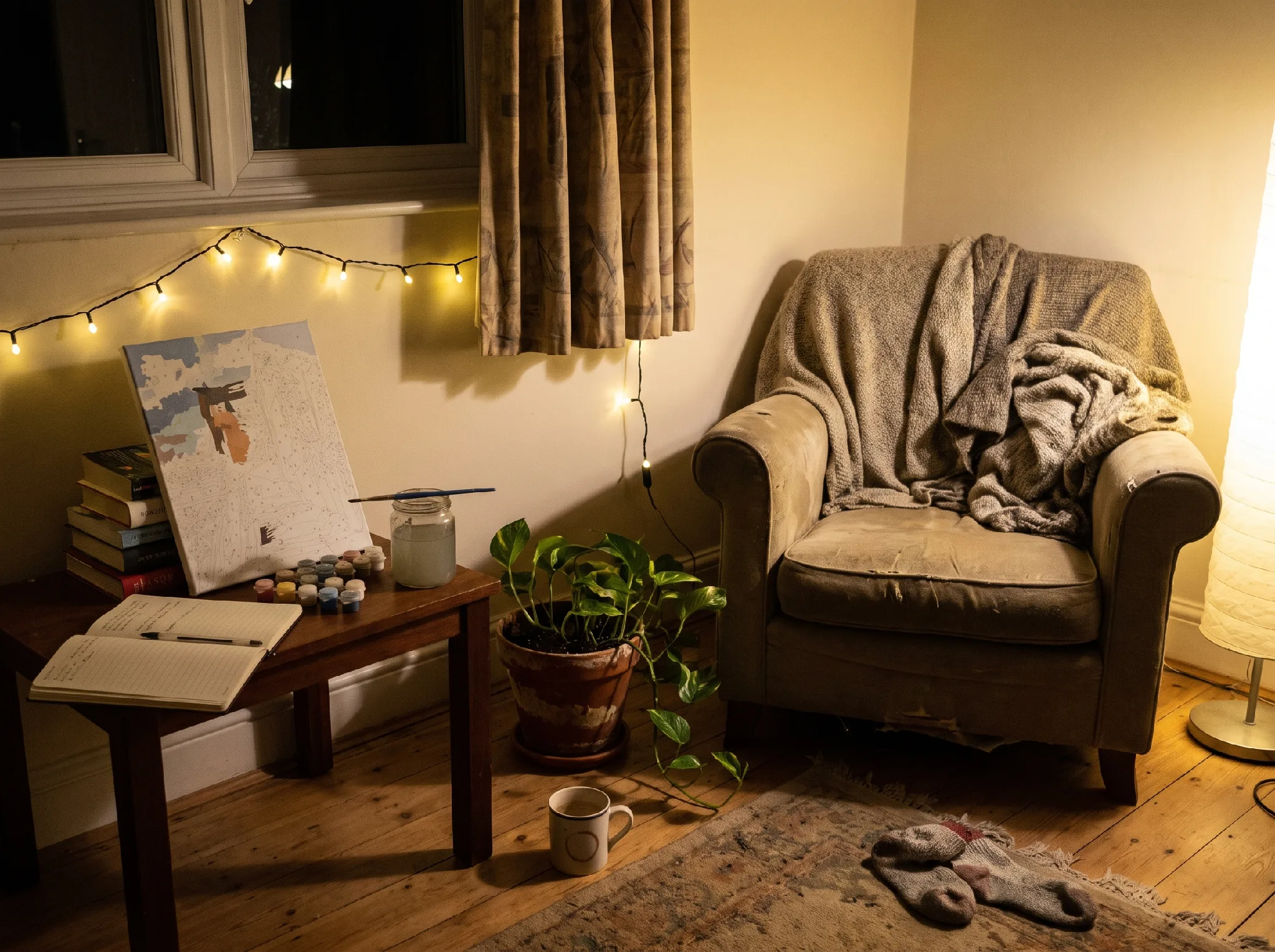
The difference between “a hobby I sometimes do” and “a ritual that actually helps” usually comes down to how you set it up. A few small changes turn painting from a distracted half-effort into something closer to meditation.
Paint under warm lamp light rather than harsh overhead lighting. It sounds like a small detail, but overhead lighting keeps your brain in “task mode,” while a warm lamp signals wind-down time, the same way it does before reading in bed. Treat the session as something to sit with rather than something to finish quickly; you’re not racing to complete the canvas, you’re giving your mind forty-five minutes of something other than notifications and news cycles. Pair it with a cup of tea or a calming playlist, the same low-key pairing that works for my creative self-care ritual practices.
If you already keep up a gratitude journalling practice, try bookending your painting session with it: a few lines before you start to name what’s on your mind, and a few lines after to notice how you feel once your hands have been busy for a while. According to Bupa UK’s guidance on creative hobbies and health, engaging in creative activities regularly can lower stress and improve overall wellbeing, not as a cure-all, but as a genuinely useful part of a broader self-care routine.
Beyond the Canvas: Building a Wider Creative Self-Care Toolkit
Painting by numbers doesn’t have to stand alone. Some of my most restorative evenings combine two or three low-effort creative practices back to back: fifteen minutes of journalling, half an hour of painting, then a page of a book before bed. If you’re looking to build out your own rotation, our list of other low-pressure creative hobbies is a good place to start browsing.
This kind of thing is being taken seriously beyond individual routines, too. West Berkshire Council’s initiative on creativity that supports health and wellbeing is one example of a UK local authority formally recognising creative practice as a public health tool rather than a nice-to-have. When a council is funding art programmes as preventative wellbeing support, it’s a decent sign that the rest of us don’t need to feel sheepish about spending an evening with a paintbrush instead of a to-do list.
Conclusion
Paint by numbers isn’t just a nostalgic craft kit gathering dust in a cupboard. Backed by cortisol studies, anxiety-reduction trials, and UK-wide survey data, it holds up as a legitimate, low-barrier mindfulness practice, one that happens to leave you with a finished piece of art on your wall afterwards. You don’t need to be good at it. You don’t need hours of free time. You just need a canvas, a lamp, and an evening you’re willing to give to something slower than your phone.
Next time you’re deciding between another episode or another scroll, consider picking up a canvas instead. Your nervous system might thank you for it.