If you’ve ever stood in a museum staring at a fragment of a marble foot and thought, “I’d really like to see where this came from,” then this post is for you. The Mediterranean is basically one enormous open-air museum, and the trick is working out how to see a decent chunk of it without spending half your holiday on trains, planes and rental cars.
Which is where a ship comes in. A 7 day Mediterranean cruise lets you hop between countries while your room stays put, and for anyone who’s a bit introverted and loves having a quiet corner to retreat to, that’s genuinely appealing. You can spend the day among ruins, then come back to a cabin, a book and absolutely no small talk if you don’t fancy it.
Of course, you can’t see everything. A week gives you maybe five or six ports, and the real skill is choosing a route that lines up with the history you actually care about. Here’s how I’d think about it.

For the Romans: Naples and Rome
Naples is the gateway to Pompeii and Herculaneum, both buried when Vesuvius erupted in AD 79. Pompeii is huge, so give yourself a few hours and don’t try to see it all. Herculaneum is smaller, easier to manage in a morning, and some of its buildings are remarkably well preserved, with carbonised wooden beams and furniture still surviving. Don’t skip the National Archaeological Museum in Naples either, where many of the finds from both sites ended up, including the famous mosaics.
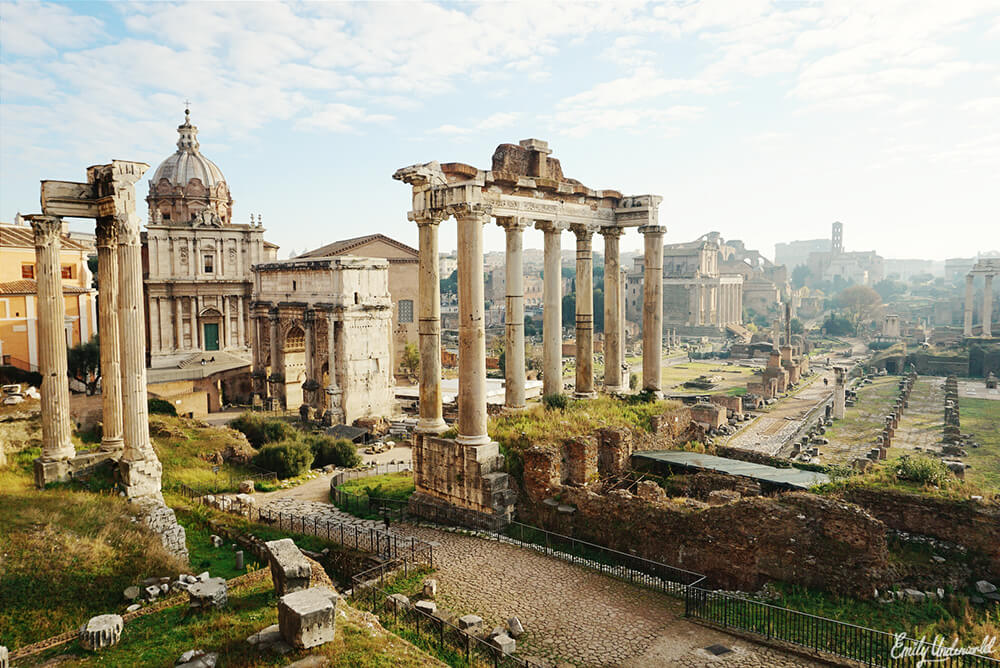
Rome is trickier from a ship because the port at Civitavecchia is a fair way from the city centre. Plan on a train or transfer of around an hour each way, which leaves you only a few hours in the city itself. Pick one or two things, like the Colosseum and the Forum, rather than trying to see everything, and book timed tickets in advance so you’re not queuing in the sun.

For the Greeks: Athens and the islands
The Acropolis is the obvious draw, and it’s worth going early before the heat and the crowds build. Ships dock at Piraeus, which has a metro line running into the centre. The Acropolis Museum at the foot of the hill is a lovely cool place to spend an afternoon, and it’s far easier to take in the sculpture when you’ve just seen the building it came from.
If you’d rather escape the crowds, a Greek island stop can be a gentler option. Rhodes has a medieval Old Town built by the Knights of St John, and it’s a UNESCO World Heritage Site. Wandering its walls and cobbled lanes feels like stepping into a different century, and it’s a nice change of period if you’ve had your fill of marble columns.
For the layers in between: Split, Valletta and Kuşadası
Split in Croatia is one of my favourite oddities. Diocletian’s Palace was built around AD 300 for the Roman emperor, and it’s still a living part of the city. There are cafés, flats and shops inside the old walls, and you’ll see people hanging out their washing next to Roman stonework. It’s like walking through a time lapse.
Valletta in Malta is packed into a small, walkable area, which makes it ideal for a short port call. St John’s Co-Cathedral holds Caravaggio’s The Beheading of Saint John the Baptist, the only painting he ever signed. The cathedral’s interior is so ornate it almost feels like too much, in the best possible way.
Kuşadası in Türkiye is your route to Ephesus, where you can see the Library of Celsus and the Great Theatre. It’s one of the best preserved ancient cities in the region, so go early to beat the tour buses and give yourself time to simply sit and take it in.
Making a history-heavy week work
A few practical tips before you pack your trowel. Read up before you go, even if it’s just a podcast or a documentary, because ruins make so much more sense when you know the story. Wear shoes with real grip, as ancient paving is slippery, and carry water and a hat because there’s rarely any shade. Check opening days too, as some sites close on certain days and museums often have a weekly closure.
Give yourself permission to skip things as well. I’d rather properly see two sites than tick off five and remember none of them. Port days are short, and ships leave on a schedule, so a rushed visit is no fun for anyone.
Sea days are a gift for the slightly obsessive. Use them to write up notes, sketch the things you saw, or finally read the book you picked up in a museum shop. A pocket notebook is worth its weight in gold, because by the third port the ruins start to blur together and your own scribbles are what bring them back.
The Mediterranean has been the stage for so much of what we study, and seeing the places that appear in textbooks changes how you think about them. You’ll understand how close together these civilisations actually were, and how much they borrowed from each other. Go with a rough plan, a good pair of shoes and plenty of curiosity, and you’ll come home with far more than a fridge magnet.