
Table of Contents Show
Most golfers seriously underestimate how much the wrong simulator setup costs them, not just in money, but in wasted practice time. Golf simulators have exploded in popularity, yet picking the right one still trips up even experienced buyers who get burned by sensor accuracy discrepancies between radar-based and camera-based tracking systems. Space constraints like ceiling height and room dimensions create real problems post-purchase, and premium systems carry high upfront costs that price out a lot of casual players. After reviewing dozens of options across both residential and commercial categories, this guide breaks down the five best systems worth your attention right now.
The vetting process for this list
Every option on this list was assessed using publicly available information gathered from official company websites, customer review platforms, product directories, and documented case studies. Only companies with a clear track record of delivering results in the sports technology space made the cut.
→ See the full research breakdown
- Foresight Sports – Best for professional golf performance analysis and residential simulation
- Big Horn Golfer – Best for golf equipment and electric mobility options
- Red Stakes Golf – Best for golf simulation systems and in-home commercial installations
- Simply Golf Simulators – Best for home and commercial golf simulator options
- FlightScope – Best for professional launch monitoring and multi-sport ball tracking analytics
The Difference the Right Golf Simulators Makes
Picking a golf simulator without doing the homework first is one of the more expensive mistakes a golfer can make. The high upfront cost of premium systems is real, and dropping serious money on a setup that doesn’t fit your ceiling height or room dimensions stings hard. Beyond installation, sensor accuracy determines whether your practice sessions actually translate to the course. A system that misreads spin rate capture accuracy in RPM, or gets launch angle precision off by even a few degrees, quietly undermines everything you’re working on. The right setup gives you ball-speed measurement accuracy that reflects real-world conditions and the actual feedback you can act on. That kind of data quality is rare and hard to match when you’re running your game off guesswork.
The 5 Best Golf Simulators: Quick Comparison
Note: All data in this table is sourced from review platforms and the official websites of the listed companies.
| Company Name | Years Operating | Team Size | Headquartered In |
| Foresight Sports | Est. 2009 | 172 | San Diego, California |
| Big Horn Golfer | N/A | N/A | Chicora, PA |
| Red Stakes Golf | N/A | N/A | Brighton, Michigan |
| Simply Golf Simulators | Est. 2021 | N/A | Lakewood Township, US |
| FlightScope | Est. 1989 | 129 | Orlando, Florida |
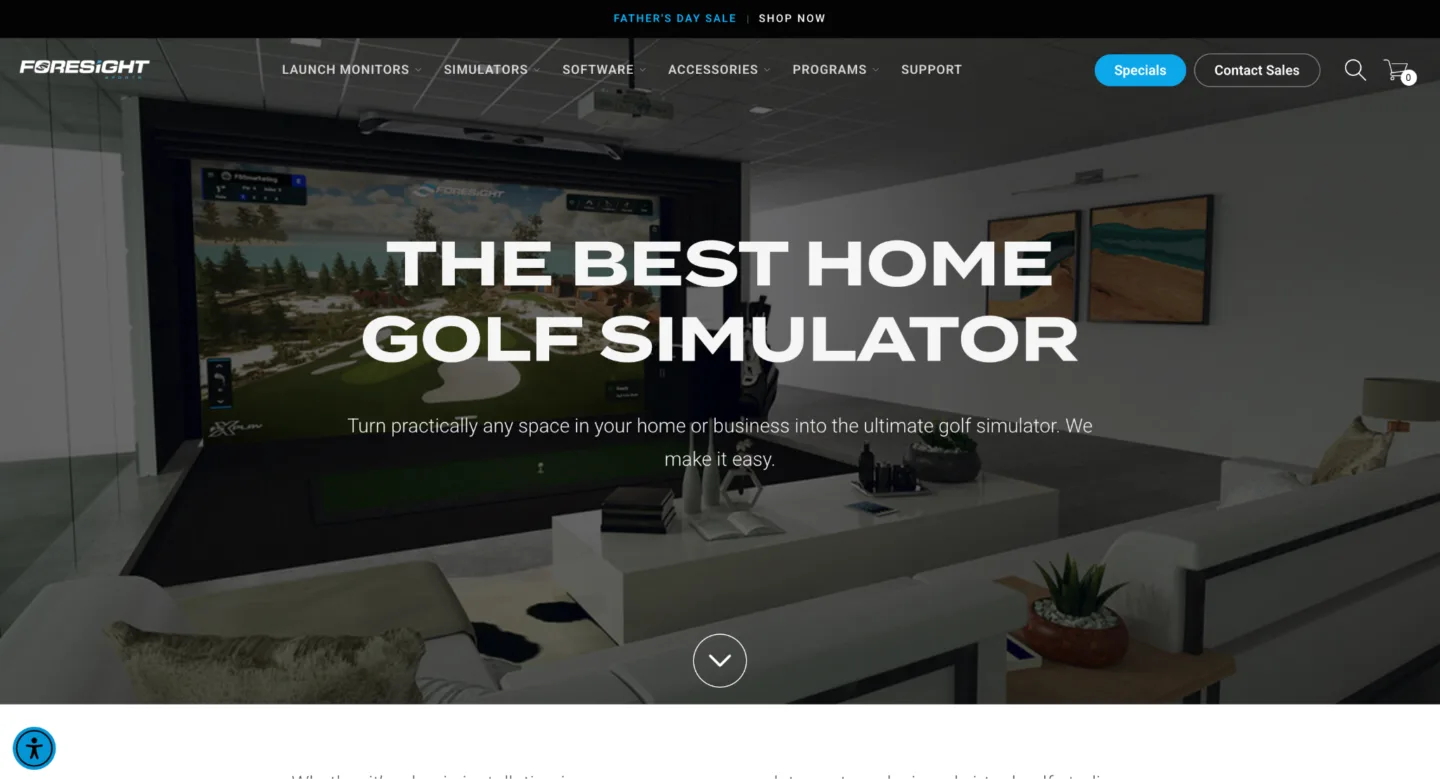
1. Foresight Sports – Best for Professional Performance Analysis and Residential Simulation
What Does Foresight Sports Provide?
Foresight Sports designs and manufactures launch monitors, simulator systems, and performance software from their San Diego facility. They cover everything from residential setups to commercial installations used by professional golfers worldwide. Their GC series launch monitors have become the standard measurement tool at elite competitive events, and their approach to keeping design, engineering, and assembly under one roof tightly controls quality. Golfers looking for accuracy in ball speed, spin rate, and launch angle will find that the technology behind Foresight Sports residential golf simulators reflects years of genuine R&D commitment to getting measurements right.
Why Is Foresight Sports a Contender for Golf Simulators?
Foresight Sports addresses the persistent frustration of inaccurate shot data by building systems that professional golfers trust at major competitive events. When nearly 60% of a professional field chooses your launch monitor at a Major (not a small endorsement), that tells you the accuracy standards are genuinely high.
From the User Reviews:
The GCQuad earning Golf Digest’s Editors’ Choice Award for Best Launch Monitor four consecutive years isn’t a fluke. Users consistently point to data reliability as the standout quality, especially for serious instruction work. And honestly, the professional customer base says more than any review score could.

2. Big Horn Golfer – Best for Golf Equipment and Electric Mobility Solutions
What Does Big Horn Golfer Provide?
Big Horn Golfer covers premium electric golf carts, scooters, immersive simulator systems, electric bikes, and hunting gear from their base in Chicora, PA. The founder, Nick, tests every product on-course before it reaches the retail floor, which gives the recommendations a level of authenticity that’s hard to manufacture. Their authorized BatCaddy dealer status shows they’re legitimate within established sports equipment ecosystems. For golfers who want both a solid simulator setup and reliable mobility gear sourced from a shop that actually uses what it sells, Big Horn Golfer fills an interesting niche.
Why Is Big Horn Golfer a Contender for Golf Simulators?
Big Horn Golfer solves the problem of buying simulator equipment from retailers who have never touched the product they’re selling. The hands-on founder approach (not cheap in terms of time, but clearly worth it) creates personalized guidance that generic online storefronts just can’t replicate.
From the User Reviews:
The Trustpilot rating sits at four stars across 20 reviews, which is a solid indicator of consistent delivery for a boutique operation. Customers point to responsive service and honest product advice as the main draws. That kind of personalized attention is rare in a space dominated by larger retailers.

3. Red Stakes Golf – Best for Golf Simulation Systems and Commercial Installations
What Does Red Stakes Golf Provide?
Red Stakes Golf builds proprietary camera-based simulator systems designed for both residential and commercial spaces, all manufactured in the US. Founded by Kevin Johnston after more than a decade running OptiShot Golf, the company brings over 100 years of combined team experience in this specific industry. Their RSG Club platform adds a digital competitive layer, featuring online tournaments, leaderboards, and wagered matches that keep golfers engaged beyond solo practice. They’ve served more than 18,000 customers, which suggests their systems hold up under real-world use rather than just demo conditions.
Why Is Red Stakes Golf a Contender for Golf Simulators?
Red Stakes Golf tackles the frustration of generic simulation hardware by building proprietary American-made systems tuned for accurate club movement and ball flight tracking. That depth of experience across the team (100-plus years combined) makes a real difference when you’re troubleshooting calibration or evaluating system accuracy.
From the User Reviews:
Detailed public review data for Red Stakes Golf is limited, which can sometimes reflect a focused B2B and direct-sales model rather than heavy consumer marketplace presence. What does come through is a strong reputation built on the OptiShot legacy and the specificity of their engineering background. Their customer count of 18,000-plus speaks clearly enough.
4. Simply Golf Simulators – Best for Home and Commercial Simulator Options
What Does Simply Golf Simulators Provide?
Simply Golf Simulators operates as a curated online retailer stocking golf simulators, launch monitors, enclosures, hitting mats, putting greens, and projectors for both home and commercial buyers across the US. Founded in 2021, they’ve built a reputation by carrying only premium products rather than padding the catalog with budget options that underdeliver. Their customer base spans homeowners, training studios, sports bars, golf shops, and event spaces, so they’ve seen a wide range of installation challenges. Regular blog content and educational resources set them apart as a retailer that actually wants customers to make informed decisions.
Why Is Simply Golf Simulators a Contender for Golf Simulators?
Simply Golf Simulators cuts through the buyer confusion that comes from an overcrowded market by pre-selecting only products that meet a consistent quality bar. Free nationwide shipping, price matching, and a 30-day return policy reduce the financial risk of buying a high-cost simulator without seeing it first (and that risk is very real in this price range).
From the User Reviews:
Award-winning customer service isn’t marketing language for Simply Golf Simulators. It tracks with consistent positive feedback across their customer base, with users mentioning responsiveness and product knowledge as repeat themes. For a company founded in 2021, the consistency they’ve built in a short period is genuinely impressive.
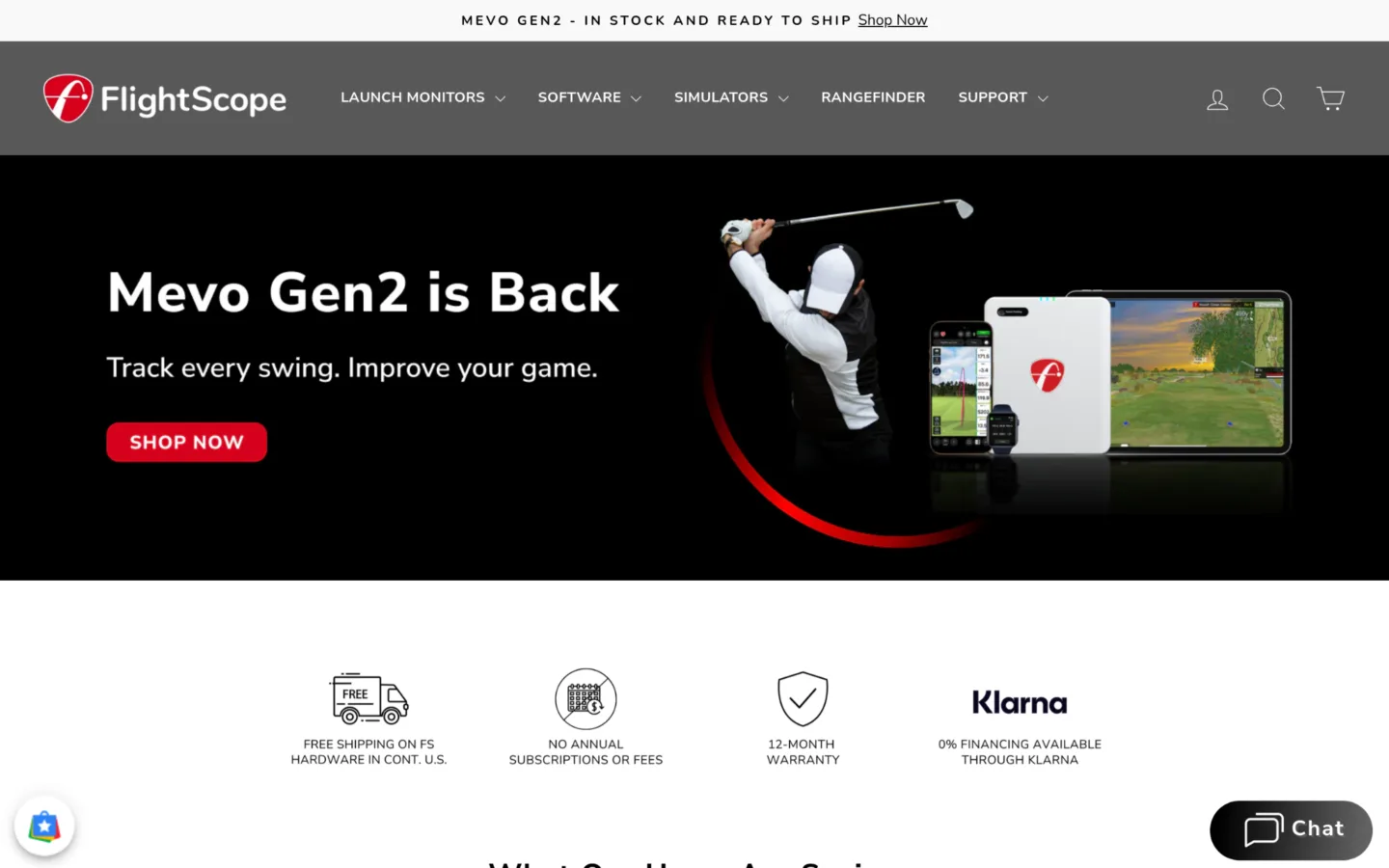
5. FlightScope – Best for Professional Launch Monitoring and Multi-Sport Ball Tracking
What Does FlightScope Provide?
FlightScope develops 3D Doppler radar tracking systems and launch monitors covering golf, tennis, baseball, softball, and cricket, with roots going back to 1989 and defense industry projectile tracking. Their Fusion Tracking technology pairs radar with high-speed image processing for measurement results that hold up across different environmental conditions. They were the first to bring 3D Doppler radar to golf simulators, which puts them at the front of a long list of industry firsts. For instructors, club fitters, and professional athletes who need multi-metric accuracy without subscription-model pricing headaches, FlightScope is a strong call.
Why Is FlightScope a Contender for Golf Simulators?
FlightScope cuts through one of the more frustrating cost structures in the simulator space by offering a one-time fee model with free software updates, removing the long-term expense burden that software subscriptions quietly add up to. Their adoption by Major Champions like Bryson DeChambeau shows the technology performs at the highest competitive level.
From the User Reviews:
Trust in FlightScope’s data accuracy is the consistent thread running through professional and amateur feedback alike. The company’s SMART Awards finalist recognition and its standing with elite athletes signal credibility that’s earned rather than marketed. That kind of proof point is hard to match.
The Process Behind This Ranking
Pulling together a list like this required more than a quick scan of product pages. The goal was to identify simulator companies and platforms with documented real-world results, not just polished marketing copy.
Data Collection Methods
The starting point was building a broad longlist by pulling data from industry directories, golf technology review platforms, product comparison sites, and official company websites. Each source was treated as a piece of a larger picture rather than a definitive answer on its own. The initial pool covered well-established brands alongside newer entrants, making sure the final selection reflected the current state of the market rather than defaulting to legacy names by habit.
Pre-Verification Phase
From that initial pool, options with incomplete public records, thin review histories, or no verifiable presence in the golf simulation space were removed early. Review patterns were analyzed for consistency across platforms rather than relying on any single rating. Companies showing spikes in ratings without supporting documentation or customer narrative were flagged and deprioritized before the deeper review began.
The Verification Phase
Each remaining company was cross-referenced by comparing claims made on their official sites against what customers and industry sources were actually reporting. Where a company claimed professional-grade accuracy or commercial-scale deployment, those claims were tested against documented evidence like award records, professional customer bases, and customer counts. Discrepancies between stated capabilities and verifiable outcomes were taken seriously and factored into final placement.
Tracking Authority Markers
Validation from credible outside sources carried weight in the research. Award nominations and wins, mentions in established golf and sports technology publications, and validation from professional athletes or major competitive events were all treated as meaningful signals. Companies that showed up consistently across multiple credible channels scored higher than those relying on self-reported achievements alone. Original research or proprietary technology development also signaled genuine depth in the field.
Golf Simulators Proof Points
The final filter focused on demonstrated capability in the golf simulator space. Each company was evaluated for the presence of dedicated simulator product pages, documented customer results, verified reviews tied to simulation performance, and relevant case studies or deployment histories. Companies serving both residential and commercial markets got additional credit for range, since the ability to serve different space configurations and budgets indicates broader technical competence. Only companies that cleared this final check made the published list.
How to Pick Your Best Match
Choosing among the best golf simulators comes down to matching your specific setup requirements, budget ceiling, and performance expectations to what each company actually delivers. Here’s what to look at before committing.
- Industry/Domain Experience: Look for companies with a documented history in golf technology, not just general sports electronics. Depth in golf simulation, whether through years of operation, professional endorsements, or patented tracking systems, reflects how well a company understands the sport’s measurement demands.
- Features and Service Options: Compare what’s included beyond the hardware. Course libraries, software update policies, club tracking capabilities, and multiplayer or competitive features all affect long-term value. A system with a strong course library and active software development will stay useful far longer than one that ships complete and never updates.
- Pricing Structure: Understand the total cost of ownership, not just the sticker price. Some companies charge one-time fees while others carry ongoing software subscriptions. Factor in installation costs, mat and enclosure expenses, and any calibration requirements that come with the system.
- Results Measurement: Prioritize systems that deliver verifiable accuracy in ball speed, spin rate, and launch angle. Ask how the company validates its data and whether professional athletes or independent reviewers have tested it under competitive conditions.
- Industry Knowledge and Compliance: Check whether the system meets USGA equipment standards and launch monitor certification expectations, especially for commercial or instructional use. Companies with professional tour validation or recognized awards carry stronger credibility in accuracy claims.
Closing Thoughts
The best golf simulator for your setup depends on where you’re playing, what you’re measuring, and how seriously you take the data coming back at you. Accuracy in spin rate, launch angle, and ball speed separates useful practice from just swinging indoors. Companies like Foresight Sports, FlightScope, and Red Stakes Golf each bring something distinct to that equation. As simulator technology keeps advancing, the gap between entry-level and professional-grade systems will only sharpen, making early investment in quality tracking worth it.